
CWS Window Replacement in Los Angeles: A Homeowner’s Guide
If you’re researching CWS windows for a Los Angeles home, the short answer is this: CWS makes a solid mid-tier vinyl and aluminum window line that can meet California Energy Commission Title 24 requirements at a price point roughly 25 – 40% below Milgard or Andersen equivalents. We install CWS regularly across the city, and for many homes, it’s the right product. Whether it’s right for *your* home depends on three things: your house’s frame type, your window openings’ condition, and whether your installer actually knows how CWS units are engineered to seat. This guide covers what the manufacturer’s brochures don’t, so you know what to ask before a single estimate gets scheduled. If you’d rather skip the research and talk to someone who installs these daily, call (903) 354-7134 for a free estimate.
What CWS Windows Actually Are (and Aren’t)
CWS is a California-based manufacturer that runs two primary product tracks: vinyl replacement windows and aluminum windows. The vinyl line is what most Los Angeles homeowners end up considering, because it hits the performance-per-dollar sweet spot for residential retrofit work. The aluminum line shows up more often in commercial storefronts and mid-century apartment buildings where the original frames were aluminum and nobody wants to rip out structural mullions. We stock both lines at Westlight, and we’ve put CWS vinyl into everything from 1940s bungalows in Highland Park to 2010s tract homes in Porter Ranch.
Here’s the part most online reviews miss. CWS isn’t a premium window manufacturer competing head-to-head with Milgard’s Ultra series or Andersen’s A-Series. It’s a value-engineered brand that delivers dual-pane insulated glass, low-e coatings, and decent air-infiltration numbers without the brand-name markup. That’s not a knock, it’s the honest framing. A homeowner who wants triple-pane glass or fiberglass frames should look at ES Windows or ECO Window Systems instead. A homeowner who wants a proper dual-pane upgrade on a 1962 stucco ranch without spending $1,800 per opening should absolutely have CWS on their shortlist.
Key CWS facts for Los Angeles buyers:
- CWS vinyl frames are fusion-welded at the corners, which means fewer leak points than mechanically fastened frames.
- The standard glass package is dual-pane with a low-e coating (a thin metallic layer that reflects heat back into the room in winter and out in summer).
- Most CWS vinyl series carry a U-factor around 0.29 – 0.32 and an SHGC around 0.25, which clears Title 24 for climate zone 6 and most of zone 8 in LA County without needing add-on packages.
- The warranty is strong on paper: lifetime on vinyl frames, 20 years on glass seal. Whether the warranty follows the house when you sell is a separate question we’ll cover below.
We carry eight manufacturer lines at our Westlight Windows & Doors home location, so CWS gets recommended when it fits the job, not because it’s the only window sitting in stock. That matters more than you’d think.
Real CWS Installed Prices in Los Angeles (2024 Numbers, Not MSRP)
Manufacturer list prices for CWS windows tell you almost nothing. What you need is the installed price: the cost of the unit plus flashing, caulking, labor, and haul-away for the old sash. Based on jobs we’ve priced across Los Angeles through 2024, here’s what CWS replacement actually runs:
| Window Type | Typical Installed Range (Los Angeles, 2024) |
|---|---|
| Single-hung CWS vinyl, standard size (approx. 36″ x 60″) | $650 – $950 |
| Sliding CWS vinyl, wider opening (approx. 72″ x 48″) | $850 – $1,250 |
| Picture window (fixed), CWS vinyl, medium format | $700 – $1,100 |
| Full-frame replacement (not retrofit) per opening | Add $250 – $500 per opening over retrofit |
| Aluminum CWS, per opening | $50 – $150 less per opening than comparable vinyl |
Those ranges reflect Los Angeles labor rates and the extra work that comes with older LA housing stock: stucco patch, dry-rot repair at the sill, or lead-paint protocols on pre-1978 builds. A clean, single-story stucco home in Westchester with easy access from the outside will land on the low end. A third-floor condo unit in Koreatown with a window that requires a boom lift will land higher, and rightly so.
Every price we quote is a written price issued before any work starts, and it doesn’t change at the door. That’s the Kingswell Guarantee: a written price before work begins, a real arrival window, a clean job site, and a written guarantee on the completed work. The Kingswell Way is simple: say the price before the work, show up in the window we gave, leave the place cleaner than we found it, put the guarantee in writing, and come back if it fails.
Title 24 and CWS: Does the Base Model Clear Compliance?
California’s Title 24 building energy standards are the first thing any Los Angeles window replacement needs to clear. The state splits residential window requirements by climate zone, and Los Angeles County spans zones 6, 8, 9, and 10 depending on how far inland you are. That matters because the U-factor and Solar Heat Gain Coefficient maximums shift between coastal and valley climates.
For zones 6 and 8, which cover most of central and coastal Los Angeles, the residential replacement requirement is a U-factor of 0.32 or lower and an SHGC of 0.25 or lower. CWS’s standard dual-pane vinyl packages, which use a low-e coating and argon-filled glass, typically test at U-factor 0.29 to 0.30 and SHGC 0.23 to 0.25. That clears Title 24 without any upgrade add-on. For zone 9 and 10, which include the hotter inland stretches of the San Fernando Valley and Santa Clarita, the SHGC requirement tightens to 0.23. Some CWS glass packages meet that, some don’t, and you need the exact product series and glass spec verified before you sign. A contractor who can’t tell you which CWS series clears zone 9 is a contractor you should let walk.
We run the Title 24 compliance check on every CWS quote we write in Los Angeles. If the standard glass package won’t clear the zone, we price the low-SHGC glass upgrade and show you the difference in writing. No guesswork, no “we’ll figure it out at inspection.”
Retrofit vs. Full-Frame: How CWS Flanges Behave in Different LA Homes
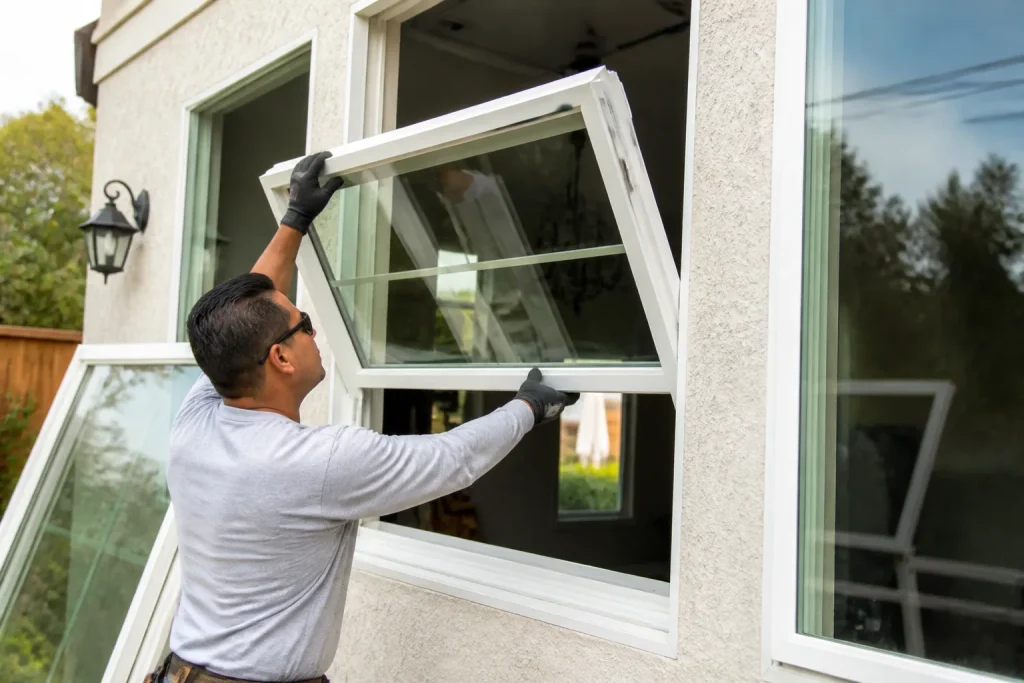
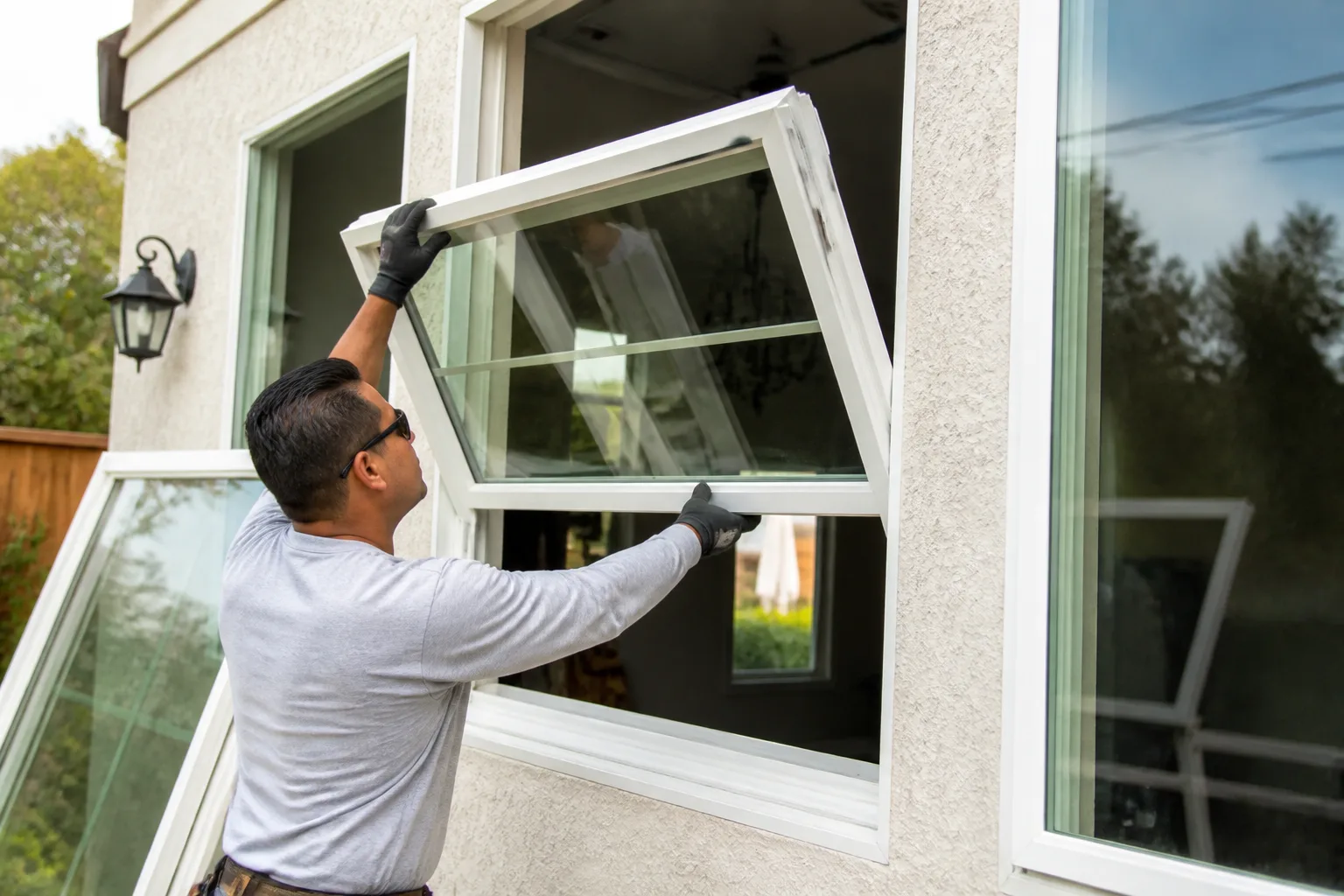
This is the section that separates installers who understand CWS from installers who just picked up a price sheet. CWS retrofit windows are engineered with a specific flange profile that seats into the existing frame’s interior channel. How well that seal holds depends almost entirely on what the original frame is made of and how it was installed.
In stucco homes, which make up a huge share of Los Angeles housing from the 1940s through the 1970s, the original frame is typically embedded into the stucco with no exterior trim or casing. A CWS retrofit flange can seat cleanly into the inner channel if the original frame is square and the stucco edge is intact. But LA stucco settles, it cracks, and we regularly find the rough opening has shifted an eighth of an inch over 50 years. A good installer shims and levels before the new unit goes in. A rushed one forces the flange and the window binds within a year. This is not a CWS problem, it’s an installer problem, and we see it most often in neighborhoods like Glassell Park and Eagle Rock where the housing stock is older and the settling is real.
In wood-frame homes, which include most post-1980 construction in places like Studio City and Sherman Oaks, the CWS retrofit seat usually performs well because the original frame is more consistent. In aluminum-framed mid-century buildings, where the original windows are floor-to-ceiling sliders, CWS retrofits can be more challenging: the slimline aluminum frames have smaller interior channels, and the vinyl replacement adds width that may reduce sightline. We pulled a CWS retrofit out of a mid-century building in Miracle Mile last month where the original installer had forced the flange and the window bowed so badly it wouldn’t lock. The fix required a custom trim kit and a full re-seat. If your building was built between 1955 and 1975 and the windows are aluminum, ask your installer how many mid-century aluminum retrofits they’ve done before you let them near the building.
When to call a pro: Window replacement involves glass, sealant, and structural openings. A bad install leads to water intrusion, mold, and failed seals. We always recommend a trained installer for CWS work. If you’re in Los Angeles and want a second opinion on whether your framing will take a CWS retrofit, our window replacement in Los Angeles team can walk the property and tell you straight.
CWS vs. Other Brands We Carry: Where It Wins, Where the Others Make Sense
We stock eight manufacturer lines, which means nobody at Westlight has a reason to push CWS into a house it doesn’t fit. Here’s the honest comparison we walk through with homeowners who come in asking about CWS specifically:
CWS vs. Milgard (Tuscany or Trinsic): Milgard’s vinyl lines have slightly tighter air-infiltration numbers and a cleaner frame profile, but you’ll pay 30 – 50% more per opening for the name. If you’re keeping the house long-term and want the slimmest frame possible, Milgard earns its price. If you’re replacing windows for energy savings and resale appeal, CWS delivers 90% of the performance for notably less.
CWS vs. ES Windows: ES Windows is a step up in build quality and glass options, particularly if you want large-format sliding doors or heavy picture windows. ES exists in our line for homeowners who want architectural-grade openings. CWS is the everyday workhorse for standard bedroom, bathroom, and kitchen window replacements.
CWS vs. ECO Window Systems: ECO’s strength is high-efficiency glass packages for hotter Los Angeles climate zones, particularly zones 9 and 10 in the Valley. If you’re replacing windows in Van Nuys or Reseda and care more about glare and solar gain than anything else, ECO often wins. If you’re in Silver Lake or Los Feliz with a standard eight-window home, CWS is the more sensible budget match.
The point: CWS is not the answer to every window question in Los Angeles. It’s the answer when your home is a standard wood-frame or stucco build, you want dual-pane performance, and you don’t want to pay for a brand name that adds nothing to your resale value. That’s a lot of Los Angeles homes, which is why we keep the line stocked.
What Happens to Your CWS Warranty If You Sell the House
This is the question almost no homeowner asks before signing, and it matters more in Los Angeles than anywhere else because people move. The median stay in a Los Angeles home is under ten years, and window warranties are a line item in the resale package.
CWS offers a lifetime limited warranty on vinyl frames and a 20-year glass seal warranty for the original purchaser. The key word is original. On most CWS series, the warranty is not automatically transferable to a second owner unless you file a transfer within a specific window (often 30 – 60 days after close) and pay a transfer fee. Some series limit the transferred warranty to a reduced coverage period, typically ten years on glass from the original install date, not from the sale date.
What this means practically: if you replace windows with CWS and sell the house in year five, the new owner may be getting a much shorter warranty than you think. If you’re planning to sell, ask your installer to provide the exact transfer terms for the series you’re buying before you commit. We include the warranty transfer terms on every written quote we write for CWS work in Los Angeles, because buyers ask about warranties at inspection and you want an answer that doesn’t require a phone call to the manufacturer.
Our workmanship guarantee is separate and it’s the part we control. Every Westlight job carries the Done Right Promise: if the work is not right within the guarantee period, we come back and fix it at no charge. That’s in writing, handed to every customer at job completion, and it doesn’t evaporate if you sell the house within the year.
Five Questions to Ask Any Los Angeles Installer Before You Buy CWS
If you’re getting quotes for CWS window replacement in Los Angeles, here are the five questions that separate competent installers from the rest. We write these for the homeowners who call us after getting a quote they don’t trust and want a second look.
- “Which CWS series are you quoting, and does that exact series clear Title 24 for my climate zone?” If they can’t answer with a specific series number and a U/SHGC figure, move on.
- “Is this a retrofit or full-frame install, and why?” Retrofit is cheaper but only works if your original frames are square and sound. A quote that defaults to retrofit without inspecting the frames is a red flag.
- “Does the written price include stucco patch, trim work, and haul-away?” In Los Angeles, stucco patch alone can add $100 – $200 per opening. If it’s not in the written quote, it will be on the revised invoice.
- “What exactly does your workmanship warranty cover and for how long?” The manufacturer warranty covers the window. The installer warranty covers the install. You need both in writing.
- “Will the warranty transfer if I sell the house, and what does that process look like?” If they don’t know the CWS transfer terms for the series they’re quoting, they haven’t done their homework.
We answer all five of these on every CWS quote we write, in writing, before any work is scheduled. That’s not a selling point, it’s the minimum standard for window work done right in Los Angeles.
Related services in Los Angeles: if you’re considering CWS windows, you may also be thinking about window installation in Los Angeles for new construction or additions, or door installation in Los Angeles if the entry door is going at the same time. We handle all three scopes, and bundling window and door work usually reduces the per-opening labor cost.
The Bottom Line
CWS windows make sense for a large share of Los Angeles homes. They’re not the cheapest option on the market and they’re not the most premium, and that’s exactly why they work: solid dual-pane construction, Title 24 compliance on standard glass, and a price that doesn’t include a brand markup. The catch is that CWS performance depends heavily on the installer’s familiarity with the system’s frame tolerances and the home’s original construction. A good installer levels, shims, and seals every opening. A rushed one blames the window when the real problem is the install.
If you’re in Los Angeles and want a straight answer on whether CWS fits your home, call (903) 354-7134. We’ll send someone out, look at your frames, run the Title 24 numbers, and give you a written price before anything gets ordered. The estimate is free, and the price won’t change at the door.
Frequently Asked Questions
Yes, CWS vinyl windows are good mid-tier quality. They use fusion-welded corners, dual-pane glass with low-e coating, and meet California Title 24 requirements for most Los Angeles climate zones on the standard glass package. They’re not the premium-est product on the market, but for a standard single-family home in LA, they deliver strong performance at a price below the big-name brands. Call (903) 354-7134 for a written estimate on CWS windows in Los Angeles.
Installed CWS vinyl windows in Los Angeles typically run $650 – $950 per standard opening for single-hung or picture styles, and $850 – $1,250 for wider sliders, including labor, flashing, and haul-away. Full-frame work adds $250 – $500 per opening over retrofit pricing. The exact number depends on your home’s stucco condition, floor level, and frame type. Call (903) 354-7134 for a free written quote specific to your house.
CWS standard dual-pane vinyl packages with low-e glass and argon fill typically meet Title 24 for Los Angeles climate zones 6 and 8, which cover most of central and coastal LA. In hotter inland zones 9 and 10, some CWS glass packages require a low-SHGC upgrade to comply. Always confirm the exact series and glass spec before signing anything. Call (903) 354-7134 and we’ll run the Title 24 numbers for your specific Los Angeles address.
CWS warranty transfer terms vary by series. In most cases, the lifetime frame warranty and 20-year glass seal warranty apply to the original purchaser, and transfer to a new owner requires filing within a short window after sale and paying a transfer fee, often with reduced glass coverage afterward. Ask for the exact transfer terms in writing before you buy. If you have questions about CWS warranties or want a written quote in Los Angeles, call (903) 354-7134.
Written by the team at Westlight Windows & Doors.
Need Windows & Doors Help?
Call Westlight Windows & Doors - licensed & insured, here with fast after-hours help in Los Angeles.
(903) 354-7134