
5 Mistakes to Avoid With Window Replacement
The most expensive window replacement mistake in Los Angeles isn’t picking the wrong glass or frame. It’s signing a contract that never says how the installer will prep the rough opening, because that invisible line item is exactly where $600 to $2,000 in “unexpected” charges hides. A window performs as well as the opening it sits in. If you’d rather skip the homework and get a straight answer, call (903) 354-7134 and we’ll walk you through it. Here are the five mistakes we see cost Los Angeles homeowners real money.
Key Takeaways
- Written rough-opening prep is the single most important line item in a window contract
- Los Angeles permit rules for window replacement vary by work type, and un-permitted work bites at resale
- Brand name recognition means little if the contractor doesn’t stock and install that line regularly
- A cleanup clause in writing protects your stucco, tile, and landscaping
- Title 24 energy compliance must be confirmed before installation, not after
1. Not Specifying Rough Opening Prep in Writing
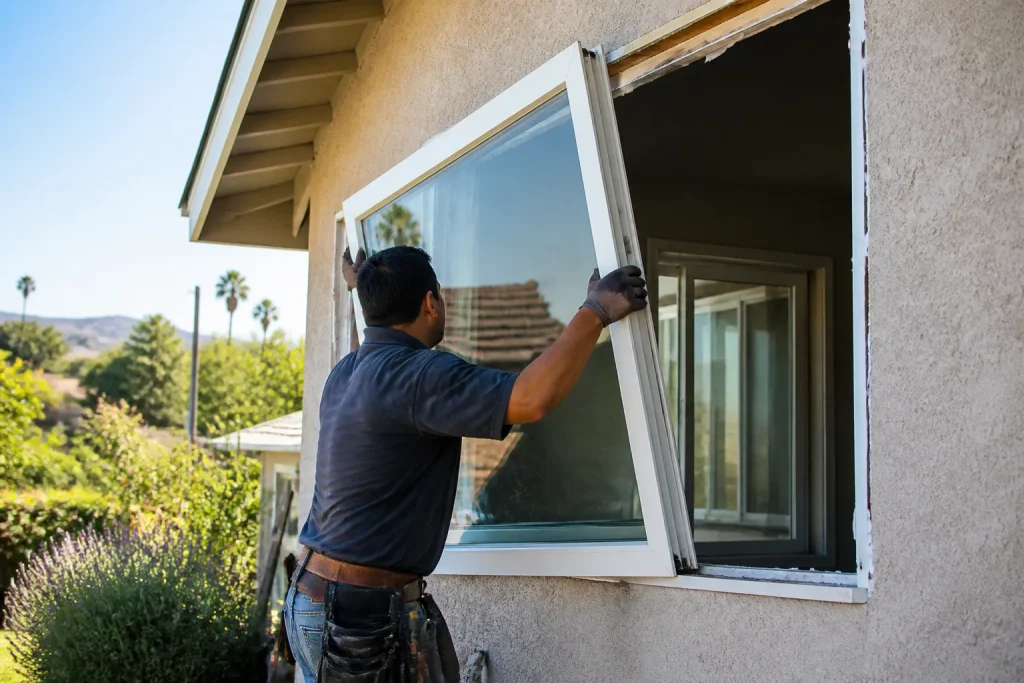
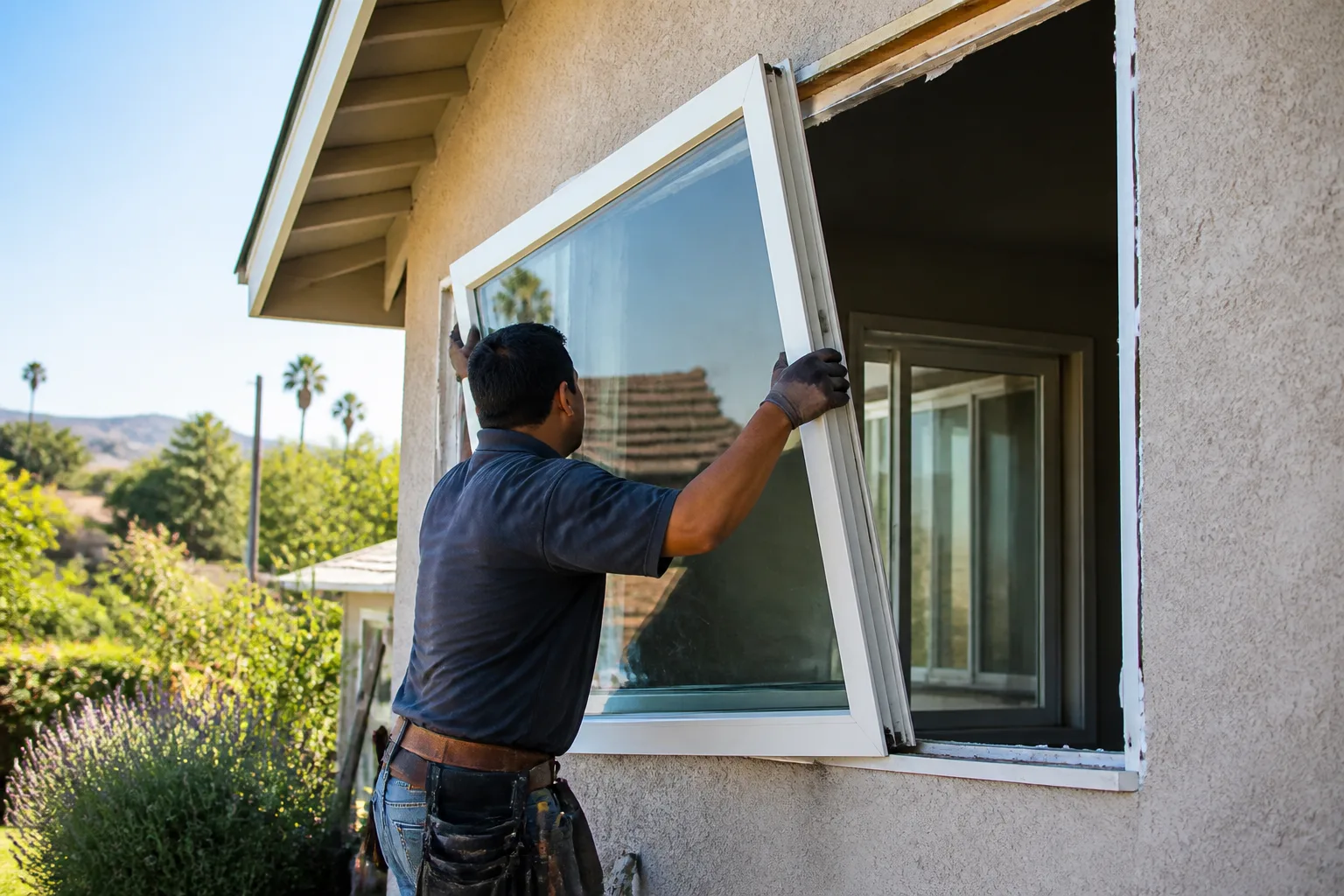
Every quote for window replacement in Los Angeles includes line items for the window itself, labor, and maybe disposal. What’s missing on most bids is a written description of how the installer will handle the rough opening, the framed hole in your wall that the window sits inside. The phrase you want to see is “shimming and squaring,” which means the installer levels the window with tapered shims and screws it into a plumb, square opening before any trim or caulk goes on.
Skipping this step is common on retrofit quotes. A retrofit, in plain words, means the new window drops into the existing frame and gets caulked in place. It’s faster and cheaper, but if the old frame is a quarter-inch out of square, the new sash binds when you try to open it, the weatherstripping doesn’t seal evenly, and the glass can actually bow under its own weight. In older neighborhoods like Silver Lake or Echo Park, where 1920s framing has settled unevenly, a quarter-inch out of square isn’t rare. It’s the norm.
What this means for your contract: the words “prep opening, shim, square, and secure to manufacturer spec” should appear on every line item for every window. Not a verbal promise. On paper. At Westlight, this spec is written into every quote before you sign, because the Kingswell Guarantee requires every price and every promise in writing before a single screw turns.
2. Assuming a Permit Isn’t Required
A lot of Los Angeles homeowners assume that replacing a window in an existing opening is a straightforward, no-permit job. Sometimes that’s true. Changing the glass or the sash, or swapping out a window for the same size in the same rough opening, often falls under minor repair and doesn’t require pulling a permit. But the moment you enlarge the opening, change the header, cut into stucco, or install a window where there wasn’t one before, the City of Los Angeles Department of Building and Safety expects a permit, full stop.
The consequence doesn’t hit you the day after installation. It hits at resale, when a buyer’s inspector flags the un-permitted window work, or when your insurance company asks for records after a claim. At that point, you’re paying to have the work inspected retroactively, which often means opening up the wall to show the rough framing, then patching and repainting. That’s a multi-thousand-dollar surprise that could have been avoided with a $300 permit and an inspection.
Here’s what to ask before you sign: “Is this like-for-like replacement or is the opening changing?” If the answer is “changing,” ask whether the contractor pulls the permit themselves or expects you to. At Westlight, we handle the permit paperwork for any Los Angeles job that requires it, and we don’t treat the inspection as optional. It’s part of the job, not an add-on.
3. Choosing a Manufacturer by Name Recognition Alone
Every homeowner in Los Angeles knows a few window brand names. That name recognition is exactly why it pays to look one step further: which of those lines does the contractor actually stock and install week in, week out? A contractor can order a window from any manufacturer and put it in your wall. That doesn’t mean they know how it’s designed to be flashed, what its tolerances are, or how it behaves in coastal salt air versus inland heat.
We carry eight manufacturer lines, including PGT, CGI, and Therma-Tru, and the reason we stock that many is simple: the product should be matched to the job, not the job forced to fit one brand. A window contractor who only pushes one line, no matter the orientation of your house or the age of your framing, is selling you what they have. That’s not necessarily the right window for a west-facing wall in Woodland Hills that takes direct afternoon sun six months a year.
Ask the contractor how many of that specific line they’ve installed in the last year. Ask whether they’ll show you a sample before you commit. Ask whether the warranty paperwork comes from the manufacturer directly or through the contractor. These questions don’t feel polite in the moment, but they’re the difference between a window installed by someone who knows the product and one installed by someone who opened the box on your driveway.
4. Ignoring the Cleanup Clause
Window replacement is messy work. Old caulk, broken glass, shims, stucco dust, and torn weatherstripping all end up on your property, and a verbal assurance of “we’ll clean up after ourselves” means nothing the moment the crew packs up and drives away. In Los Angeles, this matters more than in most places, because so many homes are stucco with tile roofs and drought-tolerant landscaping that doesn’t forgive a work boot trail through the agave.
A written restoration commitment says specifically what happens after the last window is in: debris hauled off, job site swept and vacuumed, furniture returned to its original position, and any damage to adjacent surfaces either repaired or disclosed before the crew leaves. If it’s not in the contract, it’s a favor, not an obligation.
At Westlight, “leave the place cleaner than we found it” is one of the five promises in the Kingswell Guarantee. It’s not a slogan printed on a brochure. It’s a written commitment on every job we do, and if the crew misses something, you call us and we come back. It’s marketing.
5. Signing Before the Energy Compliance Paperwork Is Confirmed
California’s Title 24 energy code applies to residential window replacement, and it’s a mistake that doesn’t show itself until inspection. The code sets minimum requirements for things like solar heat gain coefficient and U-factor, which is a measurement of how well the window resists heat flow. If the window you picked doesn’t meet the standard for your climate zone, the inspection fails, and you’re left choosing between tearing out a brand-new window or applying for an exception after the fact.
We see this happen most often when homeowners pick a beautiful window, fall in love with it, and sign the order before anyone confirms it’ll actually pass. A good installer runs that Title 24 check before the order is placed, not after. In our experience, the fix takes one honest conversation before installation: this window meets code for your zone, this one doesn’t, and here’s the closest matching option that does.
What happens when an installed window doesn’t pass inspection is this: you repair or replace the offending glass, you reschedule the inspection, and you pay for both. That’s a $700 to $2,500 lesson that usually lands entirely on the homeowner, because the contract said the installer wasn’t responsible for code compliance. Make sure it says the opposite.
When to Call a Pro
Window replacement crosses the line from awkward-but-doable to genuinely dangerous when you’re working above ground level, handling tempered glass weighing fifty pounds or more, or altering any structural framing around the opening. A window sash held at an awkward angle is a finger injury waiting to happen, and a header cut wrong is a structural problem that costs five figures to correct. If any part of the job involves a ladder and a pane larger than a storm window, it’s time to call someone who does this for a living. Related services for Los Angeles homeowners: window installation in Los Angeles and door installation in Los Angeles.
The Bottom Line
The five mistakes that cost Los Angeles homeowners the most on window replacement are all invisible at signing: a rough opening prep spec that’s missing from the contract, a permit nobody pulled, a brand name that looked right but wasn’t matched to the job, a cleanup clause that was never written down, and Title 24 paperwork that got confirmed after installation instead of before. None of these show up in the quote. All of them show up in the final bill.
That’s why the Kingswell Guarantee exists. Written price before any work starts. A real arrival window. A clean job site. A written guarantee on the completed work. If it’s not right within the guarantee period, we come back and fix it at no charge. If you’re in Los Angeles and starting to research window replacement, Westlight Windows & Doors offers free estimates. We’ll come out, measure the openings, walk you through the eight manufacturer lines we stock, and hand you a written quote with the prep method, permit status, cleanup terms, and Title 24 compliance spelled out. Call (903) 354-7134. A real person picks up, 24 hours a day, 7 days a week. We’ll give you the price before the work. That’s the way it should be.
Frequently Asked Questions
The biggest hidden cost is rough opening prep that isn’t specified in writing. When a contractor installs a new window into a frame that’s out of square without shimming and leveling it first, the window binds, leaks air, and often fails within the first year. Correcting it means removing and reinstalling the window, which typically costs $600 to $2,000. Always make sure the quote includes a written line item for shimming, squaring, and securing the window to manufacturer spec. Call (903) 354-7134 for a quote that spells this out in plain English.
No, Los Angeles generally allows like-for-like window replacement without a permit when the opening size and header stay untouched. The City requires a permit when the opening changes, the header is modified, or a new window is cut into stucco. Un-permitted work that should have been permitted gets flagged at resale, and retroactive inspection can cost several thousand dollars. Ask your contractor before signing whether the job is like-for-like and who pulls the permit if one is needed.
Most single-window replacements in Los Angeles run $900 to $2,800 installed, depending on the frame material, glass package, and whether the opening needs structural work. Retrofit installations land at the lower end. Full-frame replacements with new flashing and re-stucco work land at the upper end. The surest way to get an accurate number is a written quote after someone actually measures the opening. Estimates from Westlight are free, and the price you’re quoted is the price you pay.
Replacing every window in a typical 1,800-square-foot Los Angeles home takes one to three days on site, longer if structural changes or stucco repair are involved. Single-window jobs are usually done in a few hours, not counting inspection scheduling if a permit was pulled. The largest time variable is stucco patch and cure time, which can’t be rushed without compromising the finish. Ask for a written window of days when the crew will be on site, and hold the contractor to it, the same way Westlight holds ourselves to the arrival window in the Kingswell Guarantee.
Written by the team at Westlight Windows & Doors.
Need Windows & Doors Help?
Call Westlight Windows & Doors - licensed & insured, here with fast after-hours help in Los Angeles.
(903) 354-7134