
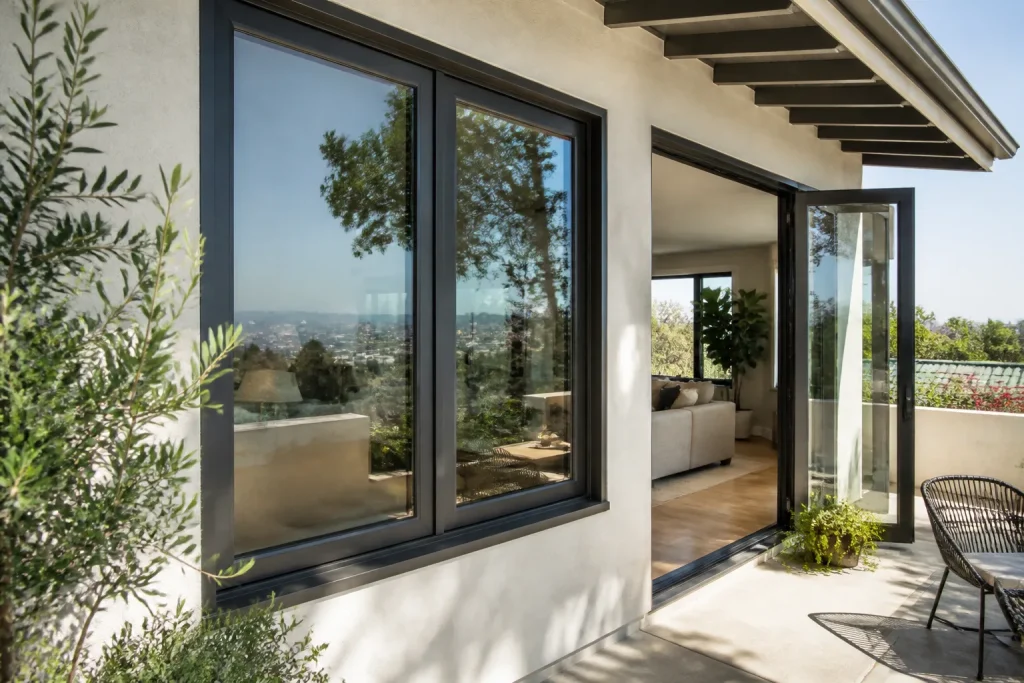
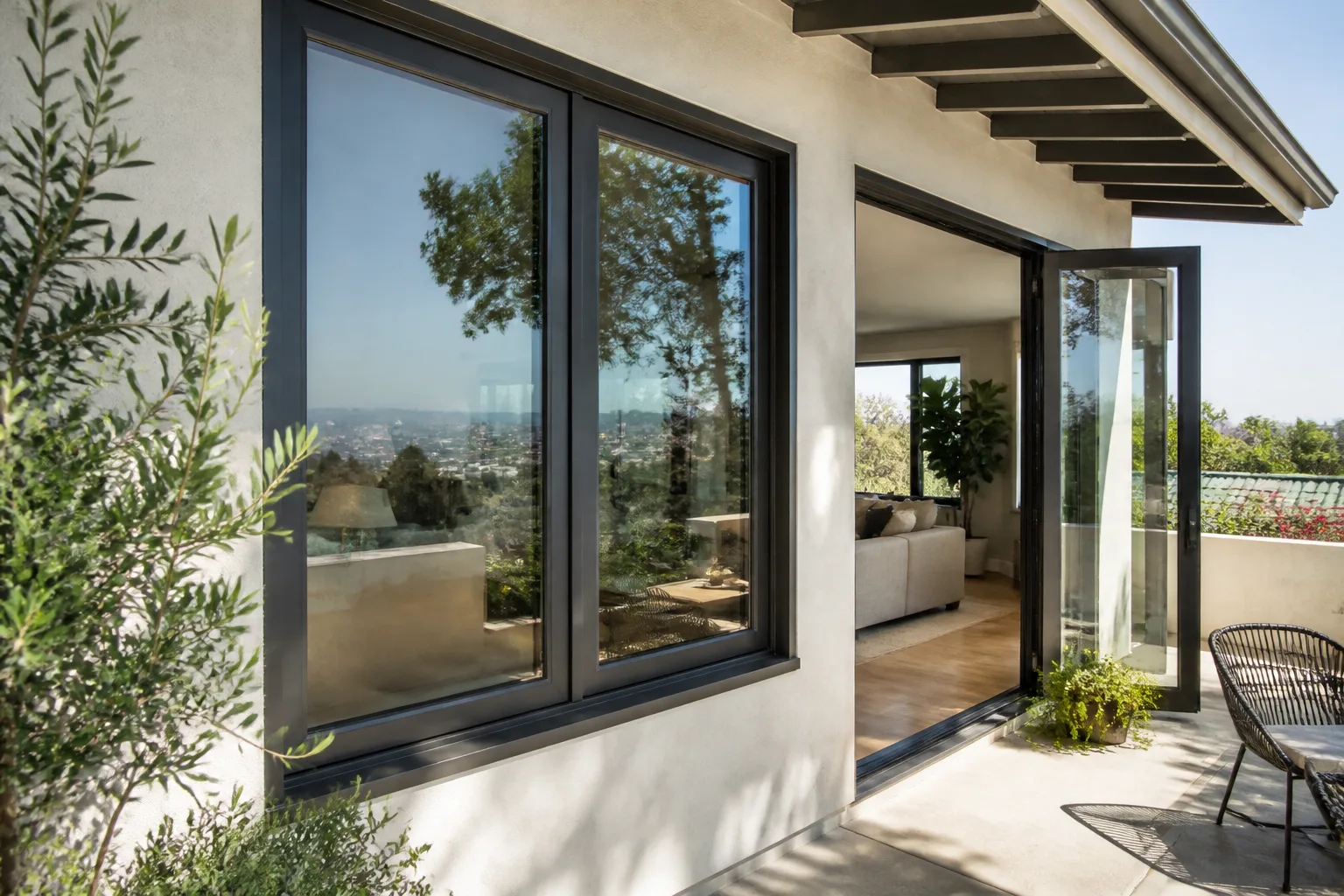
CGI Window Replacement in Los Angeles: A Homeowner’s Guide
CGI windows in Los Angeles typically cost $900 to $1,800 per window installed, depending on size, series, and finish. The honest truth is that most LA homeowners don’t need impact-rated glass, but a meaningful number are buying it anyway for a reason that has nothing to do with hurricanes: noise reduction. That laminated interlayer built to stop a 2×4 at 34 miles per hour also happens to cut street noise by a measurable margin over standard dual-pane glass. If you’re pricing a Los Angeles window replacement and want straight numbers before you call anyone, this guide gives them to you.
What CGI Windows Actually Are (and Why They Show Up in LA)
CGI is a Florida-based manufacturer that built its name on impact-rated windows and doors for hurricane zones. Their products are tested to survive the Miami-Dade County impact protocol: a 9-pound 2×4 fired at the glass at roughly 34 mph, followed by 9,000 cycles of positive and negative wind pressure. The glass can crack under that hit, but it cannot shatter or leave the frame. The laminated interlayer, a thick PVB or SentryGlas sheet sandwiched between two panes of glass, holds everything together even when the outer pane breaks.
So why are we installing CGI in neighborhoods like Silver Lake, Mar Vista, and Studio City where the worst weather event is a heavy marine layer? Because that same interlayer does something Los Angeles homeowners near the 405, the 101, or LAX notice the first night they sleep behind it: it dampens sound. Standard dual-pane low-e windows with an STC (Sound Transmission Class) rating around 28 to 30 do a reasonable job. CGI’s laminated lines, depending on the series, test in the STC 34 to 40 range. That’s not recording-studio quiet, but it’s the difference between hearing every Harley on Coldwater Canyon and hearing a low murmur you can ignore. We’ve had customers in Westchester, directly under the LAX flight path, tell us the change was more dramatic than they expected. No window makes a bedroom truly silent, but a 6 to 10 point STC jump is real and measurable, not marketing talk.
One thing worth clarifying: California has its own seismic building codes, and they don’t overlap much with Miami-Dade impact standards. A window rated for a Category 4 hurricane isn’t automatically a better earthquake window. Seismic performance is about how the frame and anchoring handle lateral movement, and that’s an installation detail more than a product rating. If you’re buying CGI for noise, buy it for noise. If you’re buying it because you think it’s earthquake insurance, save your money for retrofit bolts instead.
CGI Product Lines Available in Los Angeles: What You’ll Actually See
CGI’s residential line splits into a few families, and the difference between them matters when you’re looking at quotes. Here are the main ones you’ll encounter through LA-area dealers:
- Estate Collection: CGI’s premium aluminum line. Heavy frames, serious sightlines, the highest STC ratings in their catalog once you add laminated glass. These run $1,200 to $1,800 per window installed in Los Angeles, more for large fixed units or custom shapes. Lead times run longer, typically 8 to 12 weeks.
- Targa Series: A more economical aluminum impact line. Still impact-rated and available with laminated glass, but the frame profiles are slimmer and the hardware is more basic. Expect $900 to $1,300 per window installed. If you want CGI for noise control without paying for the Estate’s architectural brawn, Targa is the sweet spot.
- Fixed and Picture Windows: Any manufacturer’s fixed units cost less per square foot than operable windows, and CGI is no exception. A fixed laminated CGI window in a standard size might run $700 to $1,100 installed. No operator hardware means fewer parts and a lower price.
Lead time is a real conversation in Los Angeles right now. Factory orders for CGI consistently run 6 to 12 weeks from purchase order to delivery, depending on the series and options. If you’re replacing windows ahead of a rainy season or before a new tenant moves in, plan around that. A reputable dealer tells you lead time before you sign, not after. At Westlight Windows & Doors, we write the delivery window on the quote so you know exactly what you’re waiting on.
CGI vs. Standard Dual-Pane Low-E: Where the Money Actually Goes
The question most Los Angeles homeowners should ask is not “should I buy CGI?” but “what problem am I solving?” Here’s an honest comparison of what you get for the premium, because CGI runs roughly 40 to 60 percent more than a quality non-impact dual-pane window.
| Feature | Standard Dual-Pane Low-E | CGI Laminated Impact |
|---|---|---|
| Installed cost per window (LA) | $550 – $900 | $900 – $1,800 |
| STC rating (typical) | 28 – 30 | 34 – 40 |
| UV protection | Good (low-e coating) | Excellent (interlayer blocks 99% UV) |
| Break-in resistance | Moderate | High (glass won’t shatter out of frame) |
| Shatter safety | Tempered options available | Standard on all laminated units |
| Energy efficiency | Good to excellent | Good to excellent (varies by glass package) |
Here’s the straight talk: if your house is on a quiet cul-de-sac in Burbank or Pasadena and your current windows are failing because they’re 30 years old, a quality dual-pane low-e window solves your problem for about half the price. Companies like ECO Window Systems or ViewLux make excellent non-impact lines, and we install them constantly. But if you’re on a major arterial, within a mile of a freeway, or under a flight path, the laminated glass in a CGI unit is doing work that standard low-e simply can’t match. One customer on Hyperion Avenue in Silver Lake, maybe 200 feet from a constant stream of buses, put CGI in the street-facing bedrooms and standard dual-pane everywhere else. That’s the smart way to spend impact-glass money in Los Angeles: selectively, where the noise actually is, not across the whole house by default.
Is CGI Worth It for Break-In Protection in Los Angeles?
This is the second reason people buy CGI in LA, and it’s a legitimate one. Standard annealed or even tempered glass can be broken out of a frame with a few good hits from a hammer or a rock. Laminated impact glass won’t give up that easily. The interlayer is the same technology used in automotive windshields, which is why a baseball cracks a windshield but doesn’t go through it. A determined burglar with time and tools can eventually defeat any window, but laminated glass changes the math dramatically. Smash-and-grab thefts depend on speed. If the glass holds for 30 seconds instead of 3, most thieves move on.
That said, the frame and locking hardware matter as much as the glass. An impact-rated glass unit in a flimsy frame with a cheap latch isn’t a security system. CGI’s aluminum frames are stout by design, built to meet Miami-Dade structural standards, but the installation is where security either works or doesn’t. Proper anchoring into the rough opening, correct flashing, and tight tolerances matter as much as the product. We pulled a “CGI install” out of a house in Atwater Village last year that a previous contractor had put in with foam shims and drywall screws. The windows were fine. The installation was a liability. When you’re spending this kind of money, the installer’s workmanship matters every bit as much as the glass.
How to Confirm You’re Getting Real, Factory-Certified CGI
This matters more than most homeowners realize. CGI is a premium brand with a strong reputation, and that reputation attracts counterfeits and gray-market resellers. Here’s what to check before you sign anything:
- Ask for the Miami-Dade NOA (Notice of Acceptance) number. Every CGI product line has one. A dealer who can’t produce it on request is not selling you genuine CGI. Walk away.
- Check the frame stamping. Real CGI frames are stamped or labeled with the manufacturer’s marks, the NOA, and the product series. This is on the frame itself, not a sticker that peels off.
- Request factory documentation, not a verbal claim. A certified dealer can produce the product data sheet, the glass package specifications, and the warranty registration before you pay.
- Ask who honors the warranty. CGI warranties are administered through the manufacturer, but the installation warranty is on the dealer. If the installer won’t put their workmanship warranty in writing, that’s a red flag that has nothing to do with CGI and everything to do with standing behind the job.
- Get a written price before work starts. This is the part where we’ll make a shameless plug, because it matters more than any brand name. A written price with the scope, the product series, the glass package, and the lead time, given before any deposit changes hands, tells you the contractor has done their homework. It’s how we’ve run every job since 2009, and it’s the standard you should hold every bidder to.
When CGI Doesn’t Make Sense in Los Angeles
We’re in the business of selling windows, which means it would be easy to tell you that everyone should buy the most expensive glass on the truck. That would be dishonest, and it would waste your money. Here’s when CGI is the wrong choice:
- You’re on a quiet street with no freeway or flight-path noise. A good dual-pane low-e window from a brand like ViewLux or CWS gives you energy efficiency and a quiet room for roughly half the price. You’ll never miss the impact rating.
- You’re replacing windows in a rental property on a budget. Laminated glass is a premium that rents don’t recover in most LA neighborhoods. Functioning, code-compliant, energy-efficient basics are the right call.
- Your budget is tight and your windows are truly failing. A failed window seal costs you energy money every month. Replacing it with a quality standard unit now beats waiting a year to afford CGI while your energy bills climb. Done right is better than perfect and late.
- You need windows quickly. CGI lead times run 6 to 12 weeks. If you’re selling a house in 30 days, a standard line delivers faster. Tell your dealer the real timeline, not the aspirational one.
The right question is never “is CGI the best window?” It’s “what does my house actually need?” In our experience across Los Angeles, that answer is usually mixed: CGI or another laminated line on the noisy or security-sensitive elevations, and a quality standard dual-pane everywhere else. The savings from that split often pays for the upgrade where it matters most.
The Bottom Line
CGI windows are built for hurricane zones, but their laminated glass delivers something Los Angeles homeowners care about more: serious noise reduction, with STC ratings meaningfully higher than standard dual-pane low-e. They run $900 to $1,800 per window installed, lead times run 6 to 12 weeks, and they’re worth it if you live near a freeway, a major arterial, a flight path, or you want the break-in resistance of laminated glass. They’re overkill for quiet streets, where a good dual-pane from a brand like PGT or ViewLux solves the problem for less. Whatever you choose, get a written price before work starts, confirm the NOA number, and make the installer put their workmanship warranty in writing. If you’re in Los Angeles and want to talk through whether CGI is the right fit for your house, Westlight Windows & Doors offers free estimates, and everything we quote is in writing before we start. Call (903) 354-7134 and we’ll walk you through it, no pressure.
Frequently Asked Questions
CGI window replacement in Los Angeles typically costs $900 to $1,800 per window installed, depending on the series, size, and glass package. The Estate Collection runs at the higher end, while the Targa Series and fixed units come in lower. Lead times of 6 to 12 weeks are standard for factory orders. Call (903) 354-7134 for an exact quote on your specific windows, estimates are free and written.
Yes. The laminated interlayer in CGI’s impact-rated glass raises STC ratings from the 28 to 30 range typical of standard dual-pane low-e to 34 to 40, depending on the series and glass package. That’s a measurable difference for homeowners near freeways, major arterials, or flight paths in Los Angeles. A good dealer can pull the specific STC rating for the exact unit you’re considering.
For noise-sensitive locations and security-conscious homeowners, yes. For quiet residential streets, usually not. The laminated glass is the expensive part, and it only earns its premium where sound or break-in resistance is a real concern. A split approach, CGI on the loud or exposed elevations and standard dual-pane elsewhere, is often the smartest use of budget in Los Angeles.
Ask the dealer for the Miami-Dade NOA number for the exact product line. Genuine CGI frames are stamped with the manufacturer’s marks and the NOA, and a certified dealer can hand you the product data sheet and warranty registration before you pay. If they can’t produce those documents, don’t sign. Call (903) 354-7134 to speak with a real person who can walk you through what to look for.
Written by Owen Satterfield, Owner at Westlight Windows & Doors, serving Los Angeles since 2009.
Need Windows & Doors Help?
Call Westlight Windows & Doors - licensed & insured, here with fast after-hours help in Los Angeles.
(903) 354-7134